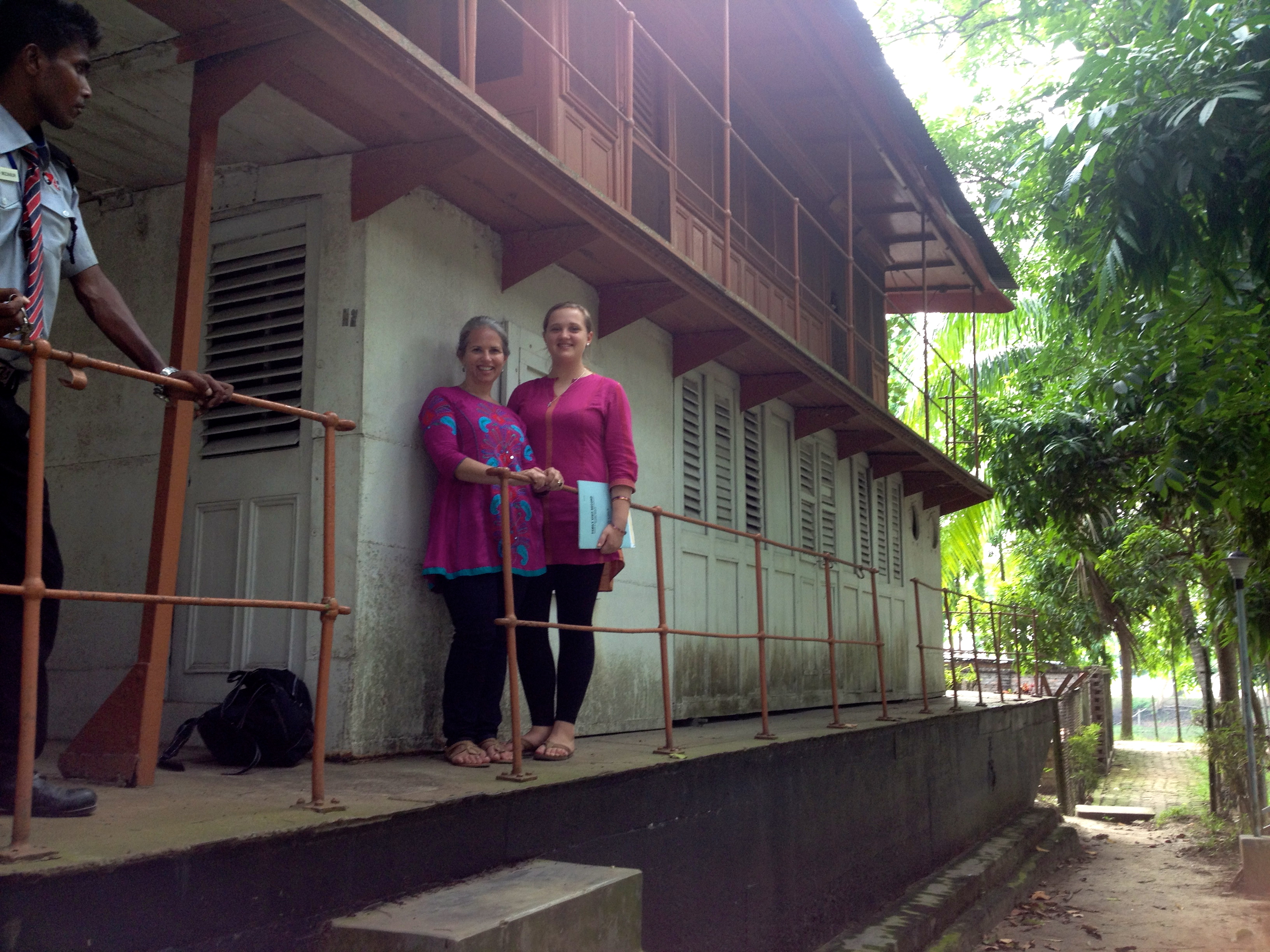
We made it to the Matlab barge
From Emma: We rose at 4 am still jet lagged from the 22 hour flight but eager for our full day of more history. With fresh mangos and lychees in our stomachs we jumped into the microbus for a three-hour trip full of twists and turns to the infamous Matlab.
From Meg: We decided to go to Matlab because that is where my father, Dr. George Curlin, spent a lot of his time when he worked at the Cholera Research Laboratory in Dhaka. One of my fondest memories of going off to see Dad’s office when I was a girl was the day we rode a speedboat for most of a day to arrive at Matlab. We spent the night in the barge, where the researchers would stay when they came down from Dhaka to work. Since Emma is interested in understanding the impact a non-governmental organization can have on a community, I wanted her to see the amazing work going on since 1966 at the International Centre for Diarrhoeal Disease Research, Bangladesh (ICDDR,B), serving a subdistrict in Bangladesh called Matlab.
Emma: After victoriously escaping Dhaka’s city traffic we began to see the true beauty of the country. At a sharp turn of the small road we passed three young girls walking hand in hand eager on their way to school, men crowded in a small store in morning conversation, followed by a small lake with children joyfully racing while swimming near their mother doing her wash at the edge of the water.
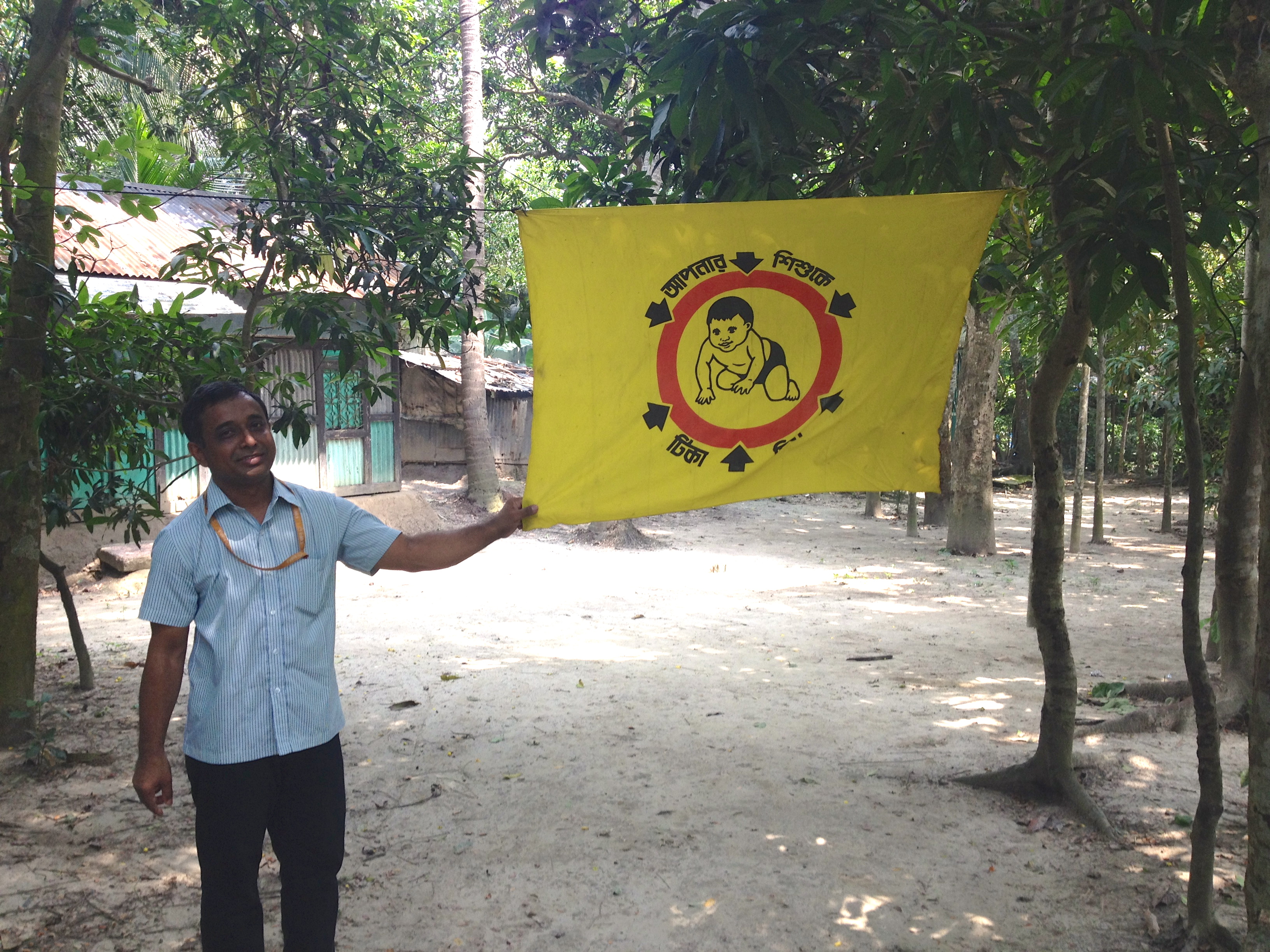
Jamal at the sub clinic
After three hours of a pounding headache from all the curves of the road we were led by Jamal, our tour guide for the day, to one of the village clinics. An elderly lady opens her home to serve the local women and their children. Seven young women patiently waited with their bright yellow infant cards noting all medical information for a baby check up and immunizations. Jamal and the leaders of the sub clinics were proud to show off their impact on the community.
Meg: ICDDR, B works to reduce the fertility, infant and child mortality rates by offering community health services through substations, where pre- and post-natal check ups, IUD insertion and family planning counseling are done, and in healthy baby clinics, where children have their immunizations, and have a check-up at regular intervals, just like my two children had. The yellow baby flag tells the community that the clinic in this woman’s house is now open. Fertility rates in Matlab are down from 5.6 children to 2.3, and infant and under five-year old child mortality rates, once 120 out of every 1,000 births has been reduced to 30, thanks to these interventions.
Emma: Another 5 miles down the bumpy dirt road we came to a white bridge that led to hope. The ICDDR,B hospital was full of dedicated and educated young doctors, nurses and researchers working to bring the hope of health to Bangladesh. And yet there were still many families suffering as a child or a mother recovered from a preventable disease. It was very difficult to see countless men and women squished into corners of one small room with buckets, not cups, but buckets to take samples of these terrible diseases.

The female ward of the hospital. Some empty beds- a hopeful sign of progress
Meg: Before we left for Matlab, Atiq told us a story about his growing up in a village outside of Dhaka. As a boy he would take joy in watching two older boys fly their kites, battling each other to see who could cut the other’s kite string. One day, there was only one kite flying after school. Atiq asked what happened to the other boy. He learned that the boy and his entire family of five had died of cholera overnight. I remember visiting Dad at the Cholera Research Hospital in Dhaka, during the epidemic years, when cots lined the hallways and there were always people crying out in grief. So for me, this hospital was the living opposite of what I knew when I was a girl. Now, according to the wonderful medical director who took us for the tour of the hospital, cholera is less than 10% of the cases they see at the hospital and 90% of the patients they treat there are from outside Matlab, where community health education and services are greatly reducing these diseases.
Emma: As we walked and talked with the Medical Director of the hospital and learned about how mortality from these diseases has fallen to record lows, I felt hope and peace. At the last leg of the hospital tour, my mother and I were welcomed into a small room that we thought was to be another research room, but behind the curtain was a woman in

Nine centimeters- the baby is almost here
labor. I tried to wipe the stunned look off my face as we were asked to stand by her side. She was calm. Her mother, in her beautiful turquoise sari, nodded to my mom and I as the nurse explained the woman was 9 centimeters dilated. Nine centimeters! She laid unbelievably calm and even had the energy to crack a small grin to us and the nurses as she knew she was in good hands.
Meg: We took such hope with us out of that small delivery room. The mom and her baby have a better, brighter future, thanks to the talented and dedicated staff of the ICDDR,B. As we stepped onto the barge where my father and his colleagues would spend the night, under their mosquito nets, I was so proud of him and the work he did to positively affect the health and wellbeing of the people of Bangladesh.

The tremendous impact from 1966 to the present day. Through war, famines, cyclones and political unrest, all trends remain headed in the right direction.
 crazyspacesbetween
I love, love, love reading your posts about this amazing journey you’re both on. Thank you so much for sharing and bringing us along!!
Sally
Sally, thanks for your note. More to come — hope we continue to be blessed with these experiences.
I almost feel like I am there as your beautifully strung-together words create vivid images. What a wonderful trip to share. Thank you!
Thank you! More to come — great creative outlet on the road…M