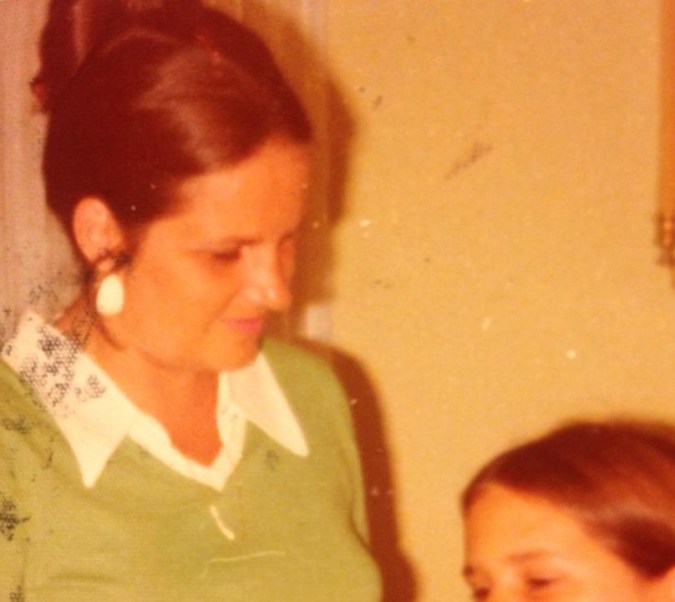
There are few memories I have of my grandmother. Her raspy voice that came alive with her loud and colorful laugh, her terrible habit of smoking cigarettes, the crossword puzzle in the New York Times that she would stare at for hours on a Sunday morning, the continuous family joke of arranging a marriage for me with the cute French boy next door, and our silly fights about why I would have to wear a dress on Easter or any other event held in her home.

Surprisingly shining a smile even though I am in a dress on Easter– rare scene at the Curlin estate
I hate that these are the only memories I have of my Nonnie. I can’t help but to be angry at myself and absolutely devastated that I will never get the chance to hear her laugh and have a silly fight with her one more time.
However, I am blessed to have gotten the chance to become friends with the people dear to my Nonnie. Every time I hear a quirky story or witness a tear shed about her I learn something new. Instead of those five basic memories, I have been able to create a lifelong image of my grandmother in my mind and in my heart.
My mom and I have traveled to Bangladesh and India this past month to retrace my grandparent’s steps. We stayed with Mustari, my grandmother’s best friend, or as my mom has coined her, my Bengali grandmommy.
Mustari and Nonnie met through their husbands, my grandfather and Atiq, both young doctors busy at works in the late 60s and 70s in Bangladesh, saving lives. Mustari and Nonnie did not sit back. They strived– they listened to women who were surrounded by loss and heard their cries. They came up with an innovative model– one that gave women their voice, body and hope back. Mustari and Nonnie cofounded Concerned Women for Family Planning (CWFP), what today is one of the largest organizations working with family planning and development for the women of Bangladesh. Their slogan, coined by Mustari and Nonnie when they started, says it all– “Because women matter.”
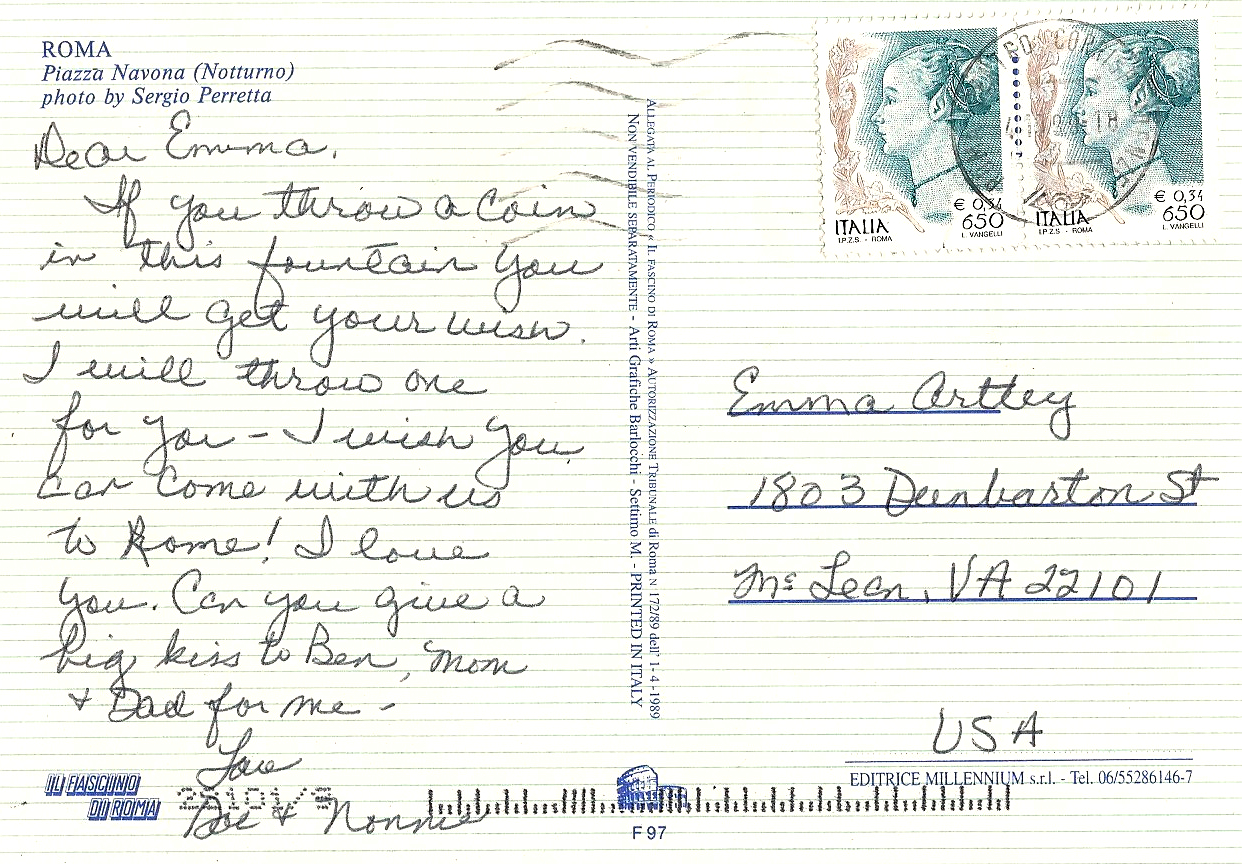
Letter from Nonnie from the Piazza Navona (Rome). “I will throw a coin in for you- I wish you can come with us to Rome! I love you.”
I already knew this little legendary plug for my grandmother’s legacy coming into this trip. I have written 5 term papers that involved her accomplishments, quoted her in assignments, researched her name into the late hours of the night, and sorted through every postcard from all around the world that she wrote to me as a little girl, to find some hidden message. There is nothing. I seemed to have driven myself crazy the past couple years trying to discover more about my grandmother so that I could explain — myself. Her articles, books, letters all show her courage, intelligence, and compassion but they leave out the real truth. They leave out her warmth, her hilarious personality, her drive that could run over anyone in her way, and her stubbornness to help each and every woman who came to her. All of which I could not have come to known without meeting my Bengali grandmommy, Mustari, early in my adult life.
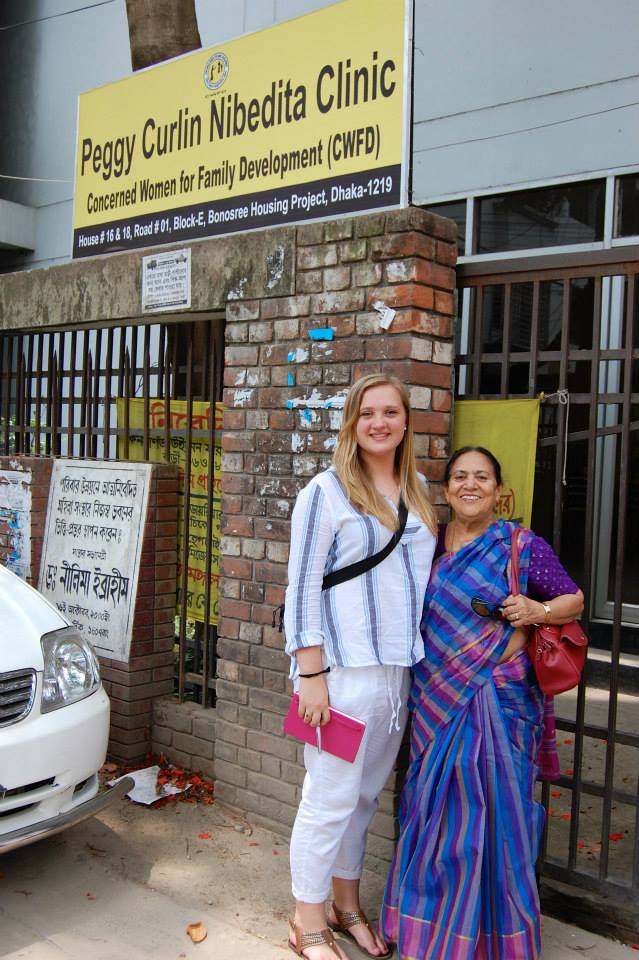
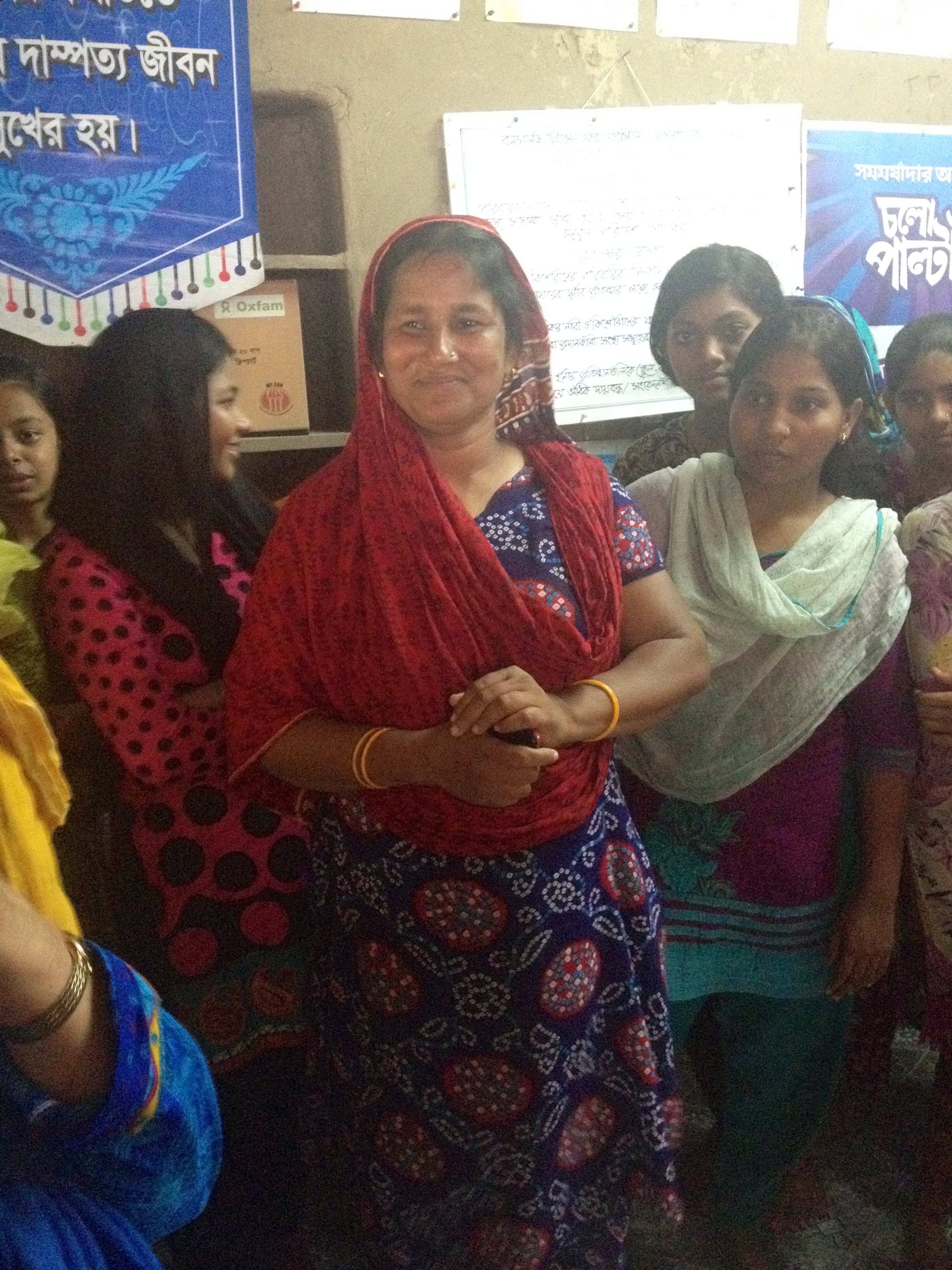
Mustari and me at the CWFD clinic in name of my Nonnie
Even though we only visited Mustari’s home for a week we all became very close. Closer than just getting to know one of my grandmother’s dearest friends. She fills in a role for my mother and me that we longed to have ever since we lost Peggy eight short years ago. Mustari, Mom and I shed tears together as we bravely admitted to ourselves and each other that we missed her more than we could bear. Sure, I lost my role model, my stubborn and compassionate grandmother that September day eight years ago. But my mom lost her own mother, woman she could share her daily accomplishments and defeats with. Mustari lost her best friend that September day eight years ago. That pain and loss never goes away.
My point in this last post of our blog is not to remember a woman that we all knew was one of the kindest and bravest souls to walk this earth, but to realize that there is something better than remembering. There is doing. There is loving. There is growing.
Mustari Khan and my mother are unbelievable women. Mustari fills this ‘Bengali grandmommy’ role to countless girls and women around the world. She fights for their rights, their voices, their ownership of their health and body. This year marks the 40th anniversary of CWFP, now known as Concerned Women for Family Development. Forty years have passed since Mustari and my grandmother decided that women matter. Mustari and CWFD continue to grow and to empower the communities they are helping. They are doing. They are loving. They are growing.
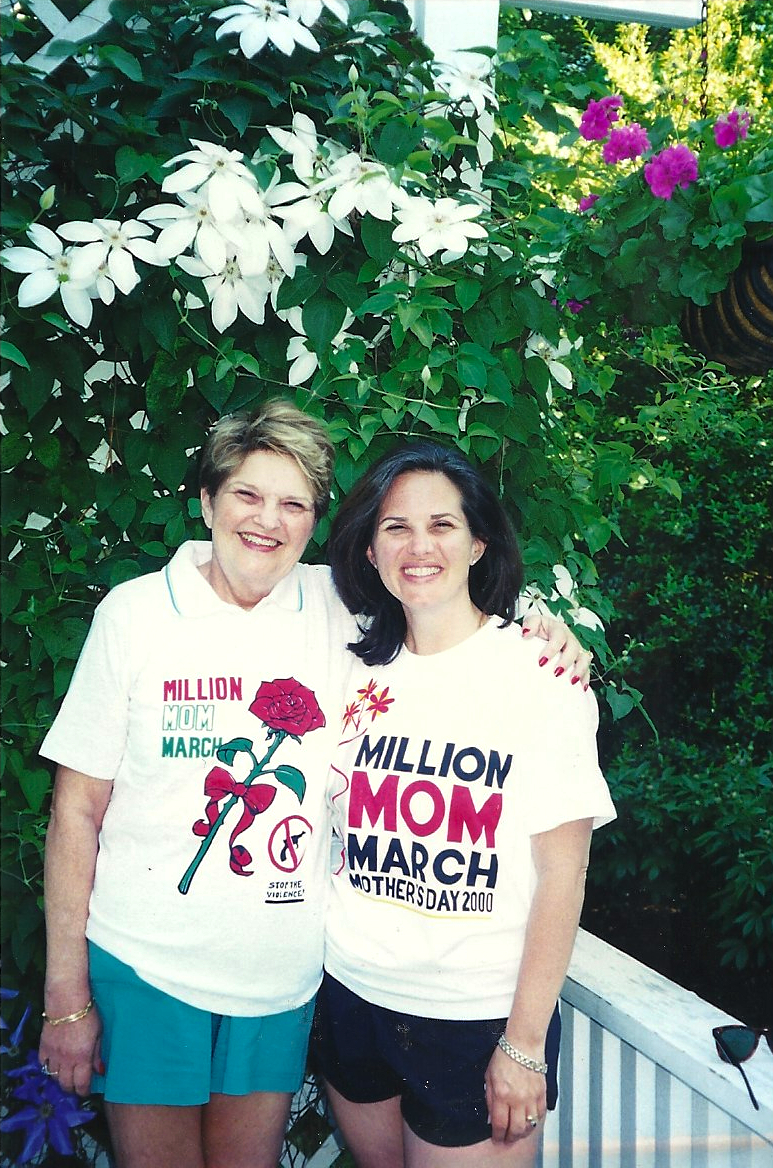
Mom and Nonnie, Million Mom March, DC 2000
Our family has changed a lot over the past 5 years or so. My brother has grown to become one of the most caring, gentle, and sympathetic men I know. He is the perfect advice-giver in my most idiotic stages of heartbreak and the best company to have alongside any of my tame teenage rebellions. My dad is the wisest man I know. As we sit in complete silence sitting on the back porch, I learn more than I can ever dream. My mom, on the other hand, amazes me everyday. She grows, loves, and does more in one day than is humanly possible.
Every day we as people go through loss, defeat, pain, and longing. We remember but sometimes we forget to grow. We forget to love what we have in front of us. We forget to do what needs to be done for the people who ask for help.
My Nonnie was an amazing woman. The most important gift she has ever given me is the opportunity to love the people who meant so much to her. My mom and my Bengali grandmommy are just a few examples of those precious gifts. The precious gift of the now.
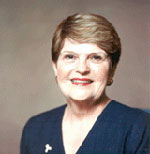
In loving memory of my Nonnie, Peggy McDowell Curlin (1940-2005)

 crazyspacesbetween