Postscript: Nonnie and my Bengali Grandmommy

There are few memories I have of my grandmother. Her raspy voice that came alive with her loud and colorful laugh, her terrible habit of smoking cigarettes, the crossword puzzle in the New York Times that she would stare at for hours on a Sunday morning, the continuous family joke of arranging a marriage for me with the cute French boy next door, and our silly fights about why I would have to wear a dress on Easter or any other event held in her home.

Surprisingly shining a smile even though I am in a dress-- rare scene

Surprisingly shining a smile even though I am in a dress on Easter– rare scene at the Curlin estate

I hate that these are the only memories I have of my Nonnie. I can’t help but to be angry at myself and absolutely devastated that I will never get the chance to hear her laugh and have a silly fight with her one more time.

However, I am blessed to have gotten the chance to become friends with the people dear to my Nonnie. Every time I hear a quirky story or witness a tear shed about her I learn something new. Instead of those five basic memories, I have been able to create a lifelong image of my grandmother in my mind and in my heart.

My mom and I have traveled to Bangladesh and India this past month to retrace my grandparent’s steps. We stayed with Mustari, my grandmother’s best friend, or as my mom has coined her, my Bengali grandmommy.

Mustari and Nonnie met through their husbands, my grandfather and Atiq, both young doctors busy at works in the late 60s and 70s in Bangladesh, saving lives. Mustari and Nonnie did not sit back. They strived– they listened to women who were surrounded by loss and heard their cries. They came up with an innovative model– one that gave women their voice, body and hope back. Mustari and Nonnie cofounded Concerned Women for Family Planning (CWFP), what today is one of the largest organizations working with family planning and development for the women of Bangladesh. Their slogan, coined by Mustari and Nonnie when they started, says it all– “Because women matter.”

Letter from Nonnie from the Piazza Navona (Rome). "I will throw a coin in for you- I wish you can come with us to Rome! I love you."

Letter from Nonnie from the Piazza Navona (Rome). “I will throw a coin in for you- I wish you can come with us to Rome! I love you.”

I already knew this little legendary plug for my grandmother’s legacy coming into this trip. I have written 5 term papers that involved her accomplishments, quoted her in assignments, researched her name into the late hours of the night, and sorted through every postcard from all around the world that she wrote to me as a little girl, to find some hidden message. There is nothing. I seemed to have driven myself crazy the past couple years trying to discover more about my grandmother so that I could explain — myself. Her articles, books, letters all show her courage, intelligence, and compassion but they leave out the real truth. They leave out her warmth, her hilarious personality, her drive that could run over anyone in her way, and her stubbornness to help each and every woman who came to her. All of which I could not have come to known without meeting my Bengali grandmommy, Mustari, early in my adult life.
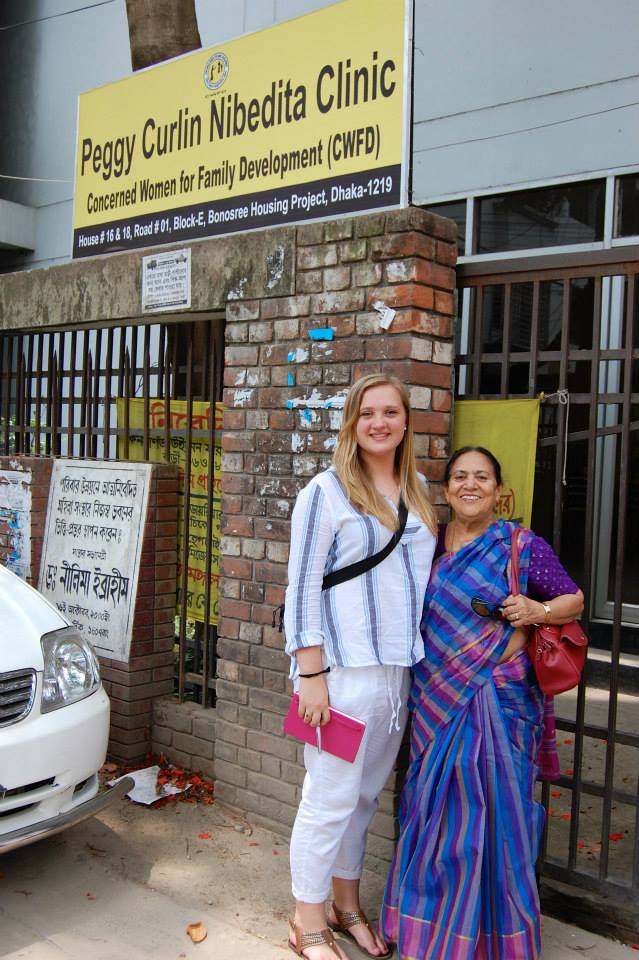
Mustari and me at the CWFD clinic in name of my Nonnie

Mustari and me at the CWFD clinic in name of my Nonnie

Even though we only visited Mustari’s home for a week we all became very close. Closer than just getting to know one of my grandmother’s dearest friends. She fills in a role for my mother and me that we longed to have ever since we lost Peggy eight short years ago. Mustari, Mom and I shed tears together as we bravely admitted to ourselves and each other that we missed her more than we could bear. Sure, I lost my role model, my stubborn and compassionate grandmother that September day eight years ago. But my mom lost her own mother,  woman she could share her daily accomplishments and defeats with. Mustari lost her best friend that September day eight years ago. That pain and loss never goes away.

My point in this last post of our blog is not to remember a woman that we all knew was one of the kindest and bravest souls to walk this earth, but to realize that there is something better than remembering. There is doing. There is loving. There is growing.

Mustari Khan and my mother are unbelievable women. Mustari fills this ‘Bengali grandmommy’ role to countless girls and women around the world. She fights for their rights, their voices, their ownership of their health and body. This year marks the 40th anniversary of CWFP, now known as Concerned Women for Family Development. Forty years have passed since Mustari and my grandmother decided that women matter. Mustari and CWFD continue to grow and to empower the communities they are helping. They are doing. They are loving. They are growing.
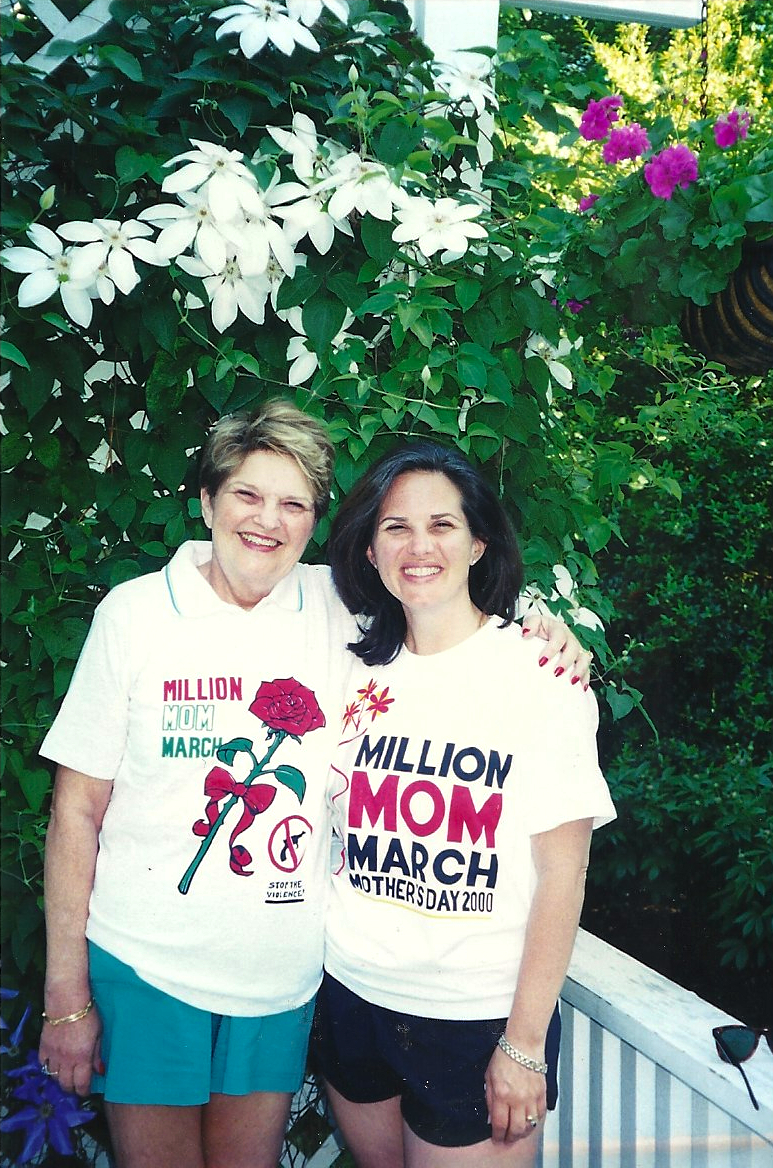
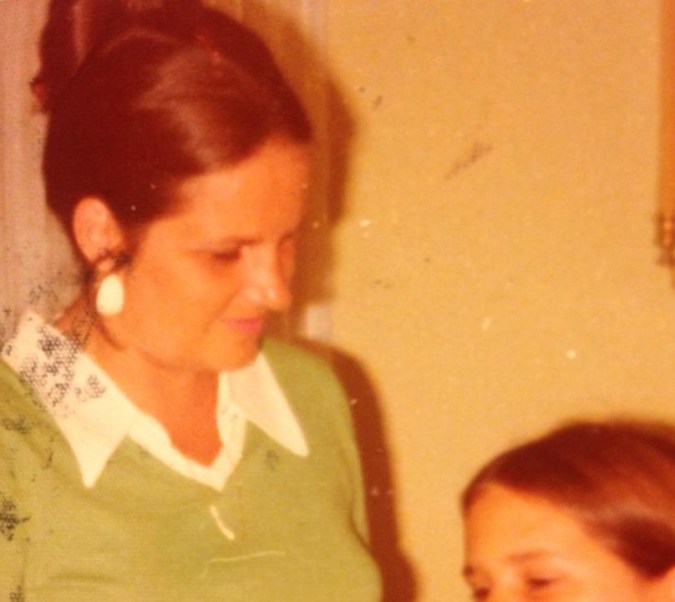
Mom and Nonnie

Mom and Nonnie, Million Mom March, DC 2000

Our family has changed a lot over the past 5 years or so. My brother has grown to become one of the most caring, gentle, and sympathetic men I know. He is the perfect advice-giver in my most idiotic stages of heartbreak and the best company to have alongside any of my tame teenage rebellions. My dad is the wisest man I know. As we sit in complete silence sitting on the back porch, I learn more than I can ever dream. My mom, on the other hand, amazes me everyday. She grows, loves, and does more in one day than is humanly possible.

Every day we as people go through loss, defeat, pain, and longing. We remember but sometimes we forget to grow. We forget to love what we have in front of us. We forget to do what needs to be done for the people who ask for help.

My Nonnie was an amazing woman. The most important gift she has ever given me is the opportunity to love the people who meant so much to her. My mom and my Bengali grandmommy are just a few examples of those precious gifts. The precious gift of the now.
In loving memory of my Nonnie, Peggy McDowell Curlin (1940-2005)
In loving memory of my Nonnie, Peggy McDowell Curlin (1940-2005)
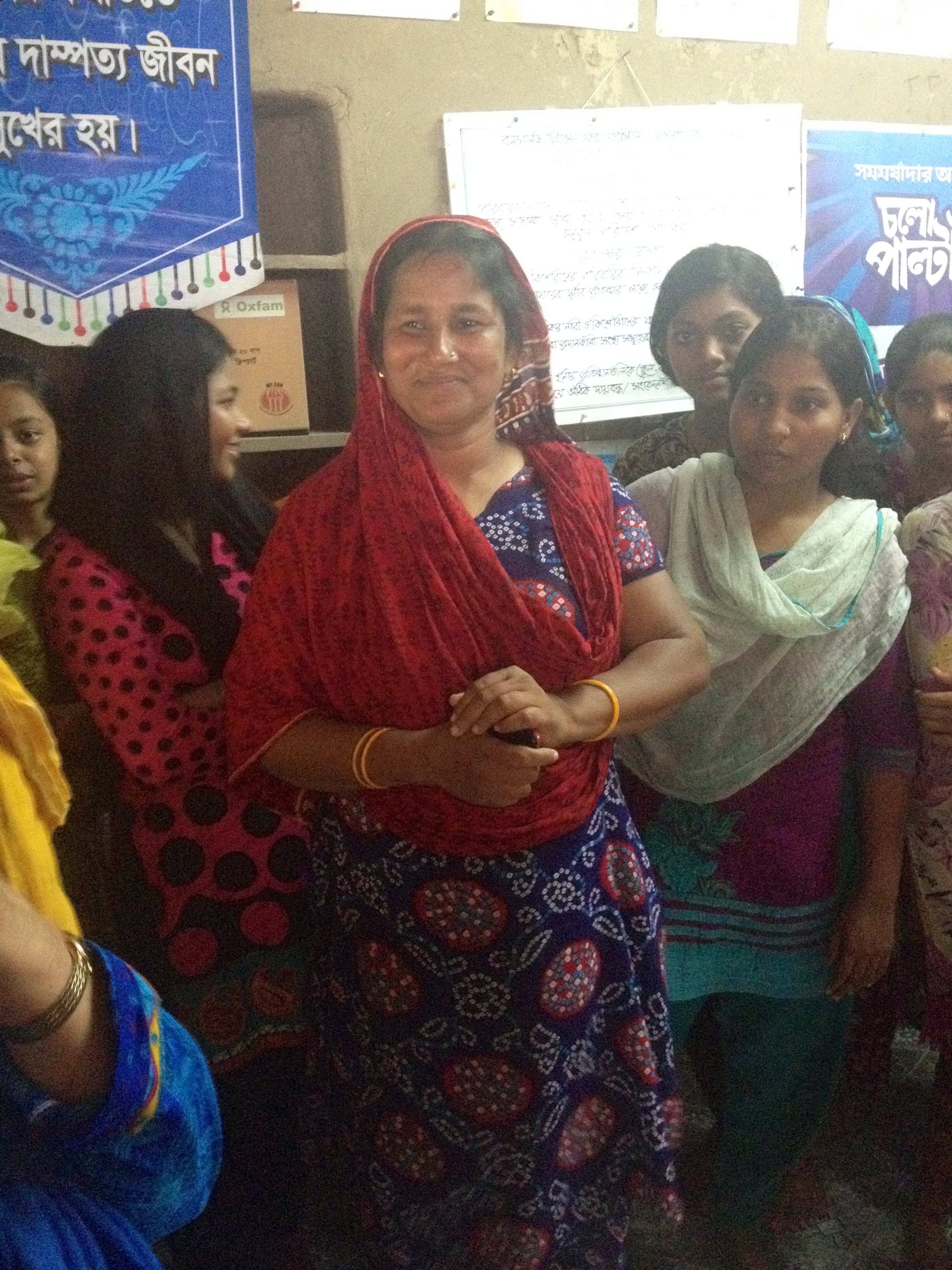
Friend? Yes, Friends Forever

Meg: Today was a pinnacle experience for us, because we had time to make new friends in Bangladesh.  Mustari took us past Tongi, where she and Mom first delivered family planning services to women in the camps, first to a Smiling Sun Clinic and then to a model village, where all 400 households are creating a community free of domestic violence.

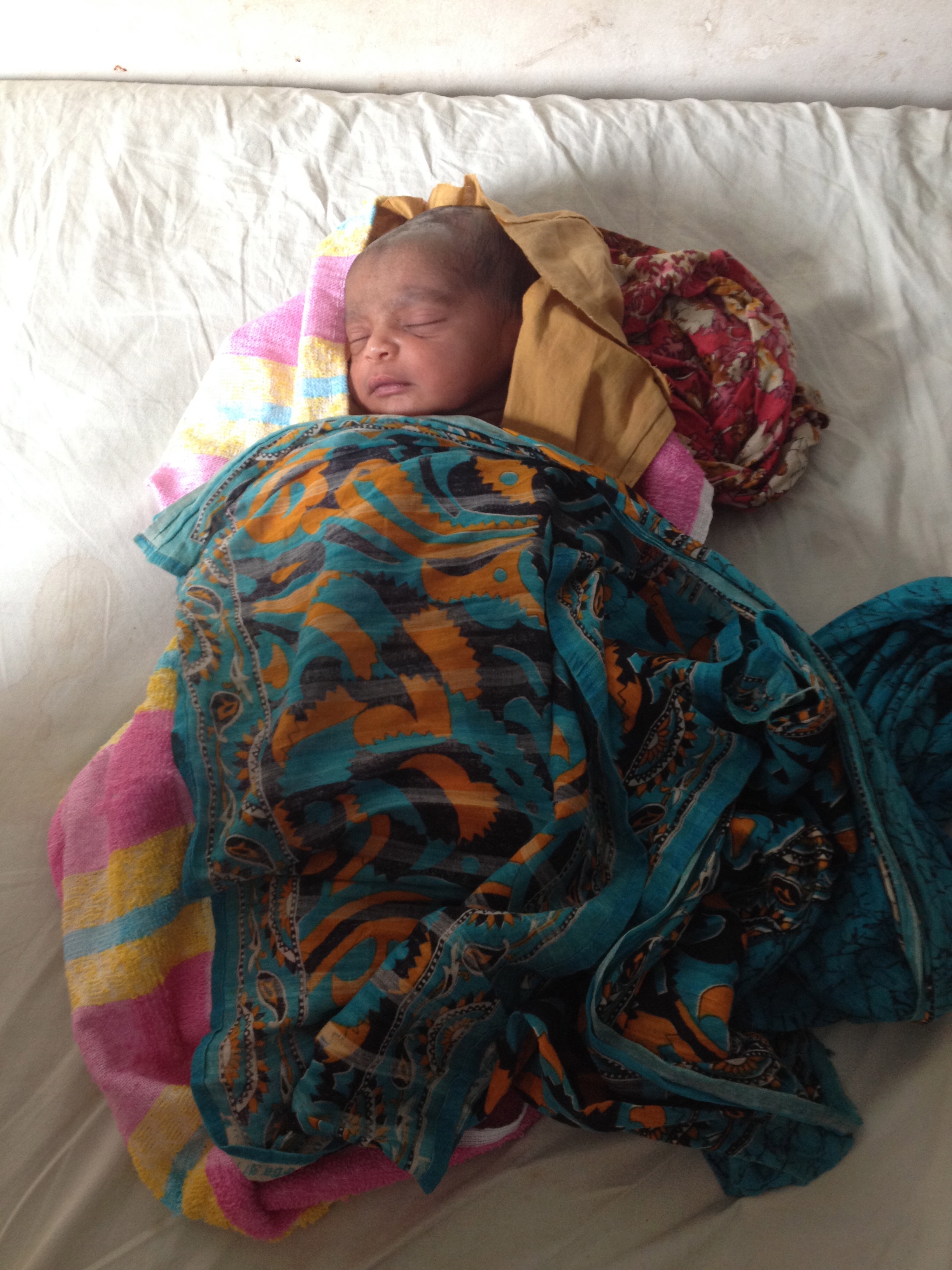
IMG_3716Emma: We arrived at the Smiling Sun clinic to meet the hardworking staff. A young man who was the clinic supervisor was all smiles as he welcomed us for the tour. Just like at Matlab, mom and I were welcomed into a small delivery room were a young woman had just had her first baby by Caesarian section. The baby boy was beautiful. He laid quietly, wrapped in colorful cloths as one of his Aunties watched over him. The mother was peacefully asleep. Without waking his mother, Mustari and I pulled out our iPhones to take hundreds of pictures. The baby was a little celebrity to us. A healthy little boy with his whole life ahead of him.  As we left, Mustari told the staff in Bangla why my mom and I visited. The only words I could understand was “Peggy Curlin’s meye (daughter) and kanna (granddaughter).” The staff nodded with delighted grins on their faces as Mustari turned to us with affection. The young supervisor smiled to me and told Mustari how much I looked like my Nonnie. My mom stated to the group “our choto (little) Peggy.” The whole group smiled and laughed as I blushed to be so honored to have her as my own grandma. 

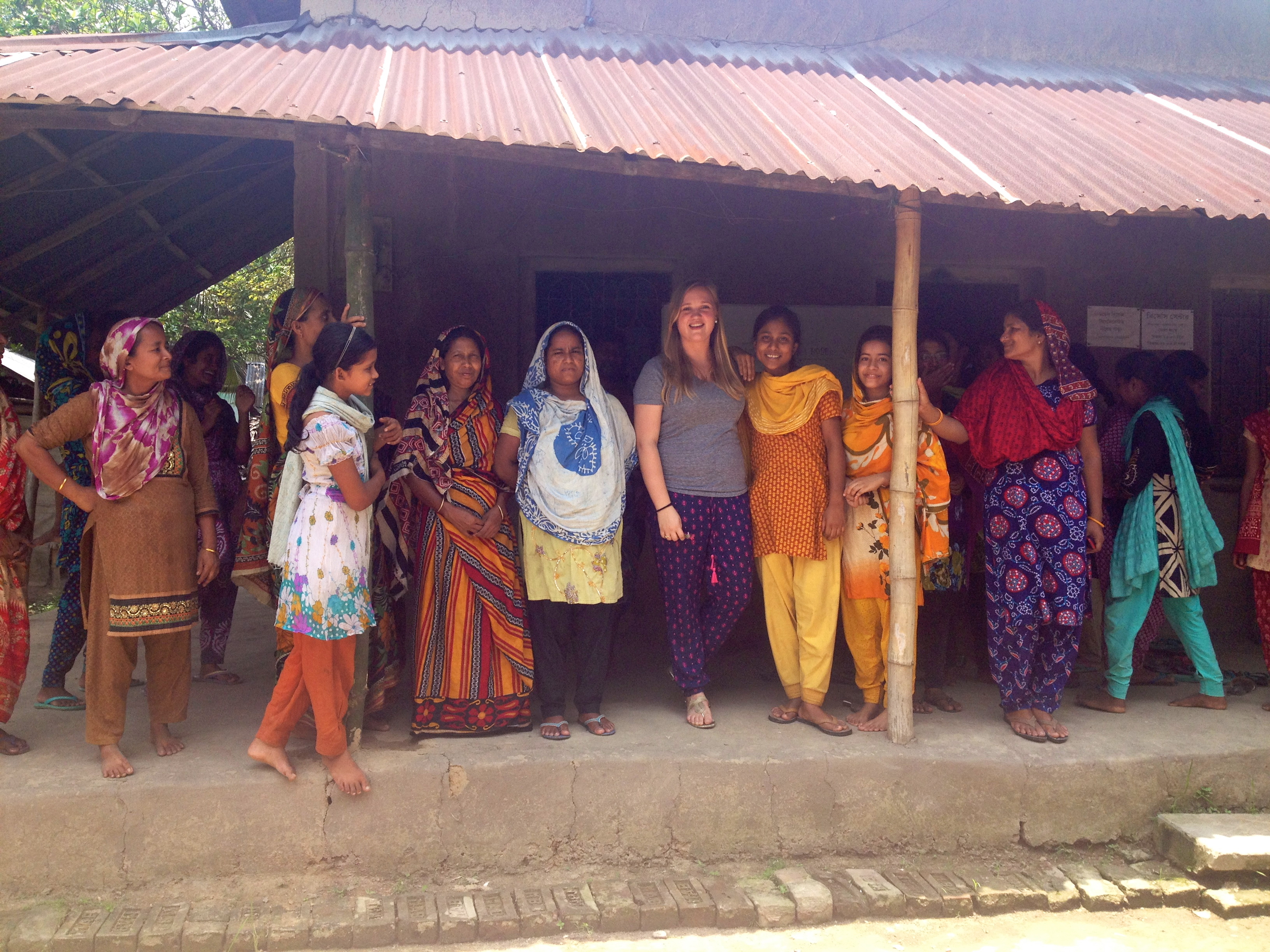
Meg: Then off to the model village after stopping first to pick up another clinic director from the nearest Smiling Sun Clinic. We drove past the small town to where the fields began, past the skinny cows, the herds of goats and the chickens to a small dirt road that led to a compound of huts, one of which was bursting with the energy of about twenty-five girls and young women who couldn’t wait to see Mustari and meet her friends. It is a social center for girls in the village, where they can learn about their rights, develop healthy self-esteem and support one another. An important element in the creation of a village without domestic violence.

Mustari at the Girls Center

Mustari once was a teacher and, tiny as she is, she can command the attention of any group of people with a smile and just the right questions. The girls adored her and answered her questions eagerly, even though all eyes were on Emma, an American girl their age. Mustari took time to translate the posters on the wall for us, which were about how domestic violence and rape were wrong.

Emma: One of the questions I asked Mustari to translate to the girls was “What do you want to be when you grow up?” Some brave girls shouted out their answers. A beautiful girl who sang her own written verses to us wanted to be a songwriter. Her song was about falling in love. Mustari translated the lyrics, “if you were a poet, I am the rhyme; if you are the rain, I am the cloud.” Like any young teenager in love she was confident about her love but most importantly confident in a bright future. Mustari asked if anyone wanted to be a doctor and four very young girls in front shot their hands up in joy. They all giggled to themselves as they tried to reach the sky with their arms. The next question I asked was when the girls wanted to get married. Everyone was confident in their answer. They all agreed that after 18 would be for the best. They had their dreams ahead of them and their priority is to reach their dreams. It was awesome to hear this answer from the girls in the room. One of my main projects interning for the United Nations Population Fund (UNFPA) last summer was supporting the Girls not Brides campaign, ending child marriage around the world. Unfortunately, I heard horror stories about innocent six or seven year old girls who were married off to elderly men as old as 50 in villages just like Tongi. To hear and see the girls from the center lift their voices and take a hold of  their futures is a great triumph. There is now hope for these girls to be able to become the doctors, songwriters, mothers, teachers, and confident women they strive to be.

Meg's hero

Meg’s hero- Shahananan

Meg: The person I most gravitated to in the room was much older than the girls.  At the question about the future, she joked that she wanted to be a movie star, making everyone laugh.  Mustari was taken with her too, and began to ask her questions.  Shahahanan is 36 — married when she was 12, had her children shortly thereafter.  Her husband beat her, so she returned home.  She is now a supporter, a witness, a big sister to the girls in the room.  Mustari asked what happens when there is a hint of domestic violence in the village.  She answered with a smile, “We all protest at the house.” I developed a girl crush.  She is my hero.

Emma: Sadly it was time to go. As mom and Mustari joked with the leader of the center, the young girls gathered around me to practice their English. They were quite good but they especially love one word —  friend. As we all took pictures and got closer together the girls would reach out their hand for a handshake and ask,”friend?” I thought about all the great friends I have and how I now have just gained 20 more beautiful friends. I replied with a smile and a handshake back, “Yes, friends forever.”


Friends forever

The Barge at Matlab Calls to Us

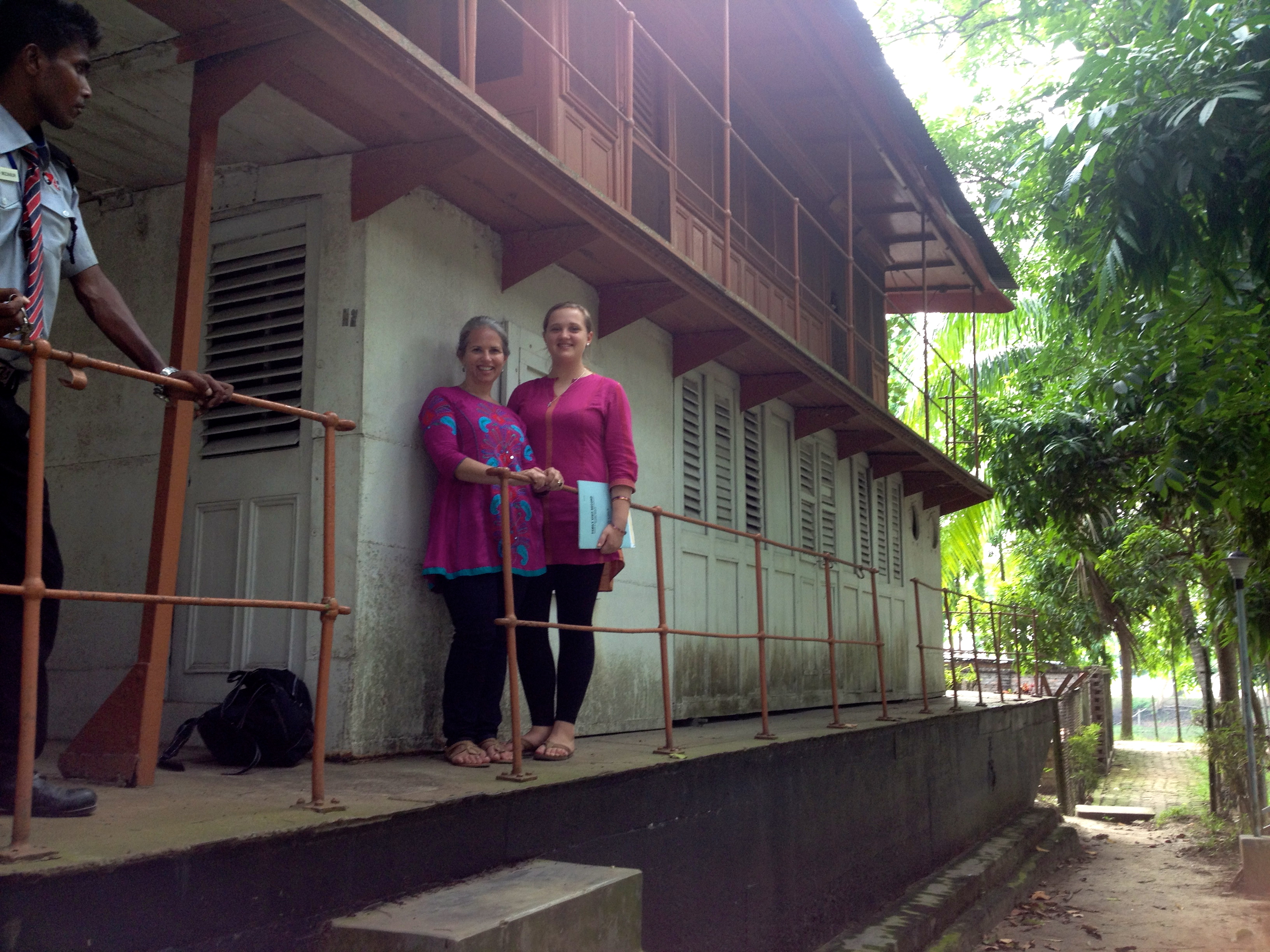
We made it to the Matlab barge

We made it to the Matlab barge

From Emma:  We rose at 4 am still jet lagged from the 22 hour flight but eager for our full day of more  history. With fresh mangos and lychees in our stomachs we jumped into the microbus for a three-hour trip full of twists and turns to the infamous Matlab.

From Meg:  We decided to go to Matlab because that is where my father, Dr. George Curlin, spent a lot of his time when he worked at the Cholera Research Laboratory in Dhaka.  One of my fondest memories of going off to see Dad’s office when I was a girl was the day we rode a speedboat for most of a day to arrive at Matlab.  We spent the night in the barge, where the researchers would stay when they came down from Dhaka to work. Since Emma is interested in understanding the impact a non-governmental organization can have on a community, I wanted her to see the amazing work going on since 1966 at the International Centre for Diarrhoeal Disease Research, Bangladesh (ICDDR,B), serving a subdistrict in Bangladesh called Matlab.    

Emma:  After victoriously escaping Dhaka’s city traffic we began to see the true beauty of the country. At a sharp turn of the small road we passed three young girls walking hand in hand eager on their way to school, men crowded in a small store in morning conversation, followed by a small lake with children joyfully racing while swimming near their mother doing her wash at the edge of the water.

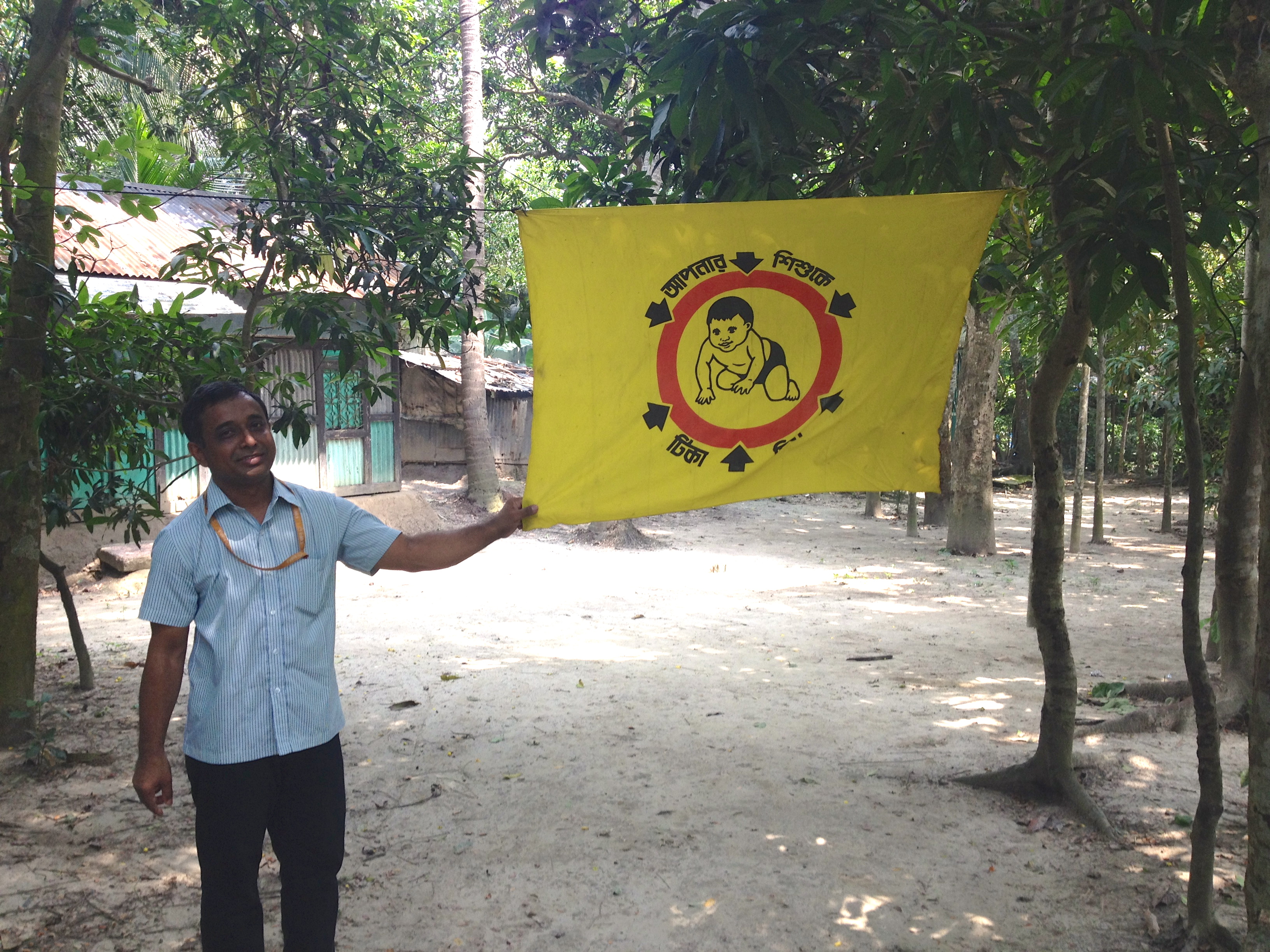
Jamal at the sub clinic

Jamal at the sub clinic

After three hours of a pounding headache from all the curves of the road we were led by Jamal, our tour guide for the day, to one of the village clinics. An elderly lady opens her home to serve the local women and their children. Seven young women patiently waited with their bright yellow infant cards noting all medical information for a baby check up and immunizations. Jamal and the leaders of the sub clinics were proud to show off their impact on the community.

Meg:  ICDDR, B works to reduce the fertility, infant and child mortality rates by offering community health services through substations, where pre- and post-natal check ups, IUD insertion and family planning counseling are done, and in healthy baby clinics, where children have their immunizations, and have a check-up at regular intervals, just like my two children had.   The yellow baby flag tells the community that the clinic in this woman’s house is now open.  Fertility rates in Matlab are down from 5.6 children to 2.3, and infant and under five-year old child mortality rates, once 120 out of every 1,000 births has been reduced to 30, thanks to these interventions.

Emma:  Another 5 miles down the bumpy dirt road we came to a white bridge that led to hope.  The ICDDR,B hospital was full of dedicated and educated young doctors, nurses and researchers working to bring the hope of health to Bangladesh.  And yet there were still many families suffering as a child or a mother recovered from a preventable disease.  It was very difficult to see countless men and women squished into corners of one small room with buckets, not cups, but buckets to take samples of these terrible diseases.

The female ward of the hospital. Some empty beds- a hopeful sign of progress

The female ward of the hospital. Some empty beds- a hopeful sign of progress

Meg:  Before we left for Matlab, Atiq told us a story about his growing up in a village outside of Dhaka.  As a boy he would take joy in watching two older boys fly their kites, battling each other to see who could cut the other’s kite string.  One day, there was only one kite flying after school. Atiq asked what happened to the other boy.  He learned that the boy and his entire family of five had died of cholera overnight.  I remember visiting Dad at the Cholera Research Hospital in Dhaka, during the epidemic years, when cots lined the hallways and there were always people crying out in grief.  So for me, this hospital was the living opposite of what I knew when I was a girl.  Now, according to the wonderful medical director who took us for the tour of the hospital, cholera is less than 10% of the cases they see at the hospital and 90% of the patients they treat there are from outside Matlab, where community health education and services are greatly reducing these diseases. 

Emma:  As we walked and talked with the Medical Director of the hospital and learned about how mortality from these diseases has fallen to record lows, I felt hope and peace. At the last leg of the hospital tour, my mother and I were welcomed into a small room that we thought was to be another research room, but behind the curtain was a woman in

Nine centimeters- the baby is almost here

Nine centimeters- the baby is almost here

labor. I tried to wipe the stunned look off my face as we were asked to stand by her side. She was calm. Her mother, in her beautiful turquoise sari, nodded to my mom and I as the nurse explained the woman was 9 centimeters dilated. Nine centimeters! She laid unbelievably calm and even had the energy to crack a small grin to us and the nurses as she knew she was in good hands.

Meg:  We took such hope with us out of that small delivery room. The mom and her baby have a better, brighter future, thanks to the talented and dedicated staff of the ICDDR,B.  As we stepped onto the barge where my father and his colleagues would spend the night, under their mosquito nets, I was so proud of him and the work he did to positively affect the health and wellbeing of the people of Bangladesh.


The tremendous impact from 1966 to the present day, through war, famines, cyclones and political unrest, all trends remain headed in the right direction.

The tremendous impact from 1966 to the present day. Through war, famines, cyclones and political unrest, all trends remain headed in the right direction.